
Running a Sex Offender Check in Matagorda County
The Texas Public Sex Offender Registry is the broadest first stop because Texas DPS gathers submissions from local registration authorities into one statewide source. It crosses the lines between Bay City, Palacios, and unincorporated Matagorda County. Searchers can also use the DPS mobile app, a DPS subscription account, the national registry, or the police agency responsible for the address. Ordinary public searches are free.
Start with a full name or a known place. Then compare the photo, aliases, physical traits, address, offense, and current registration details before deciding that a result concerns the right person. Similar names are not proof of identity. The Matagorda County jail portal and court files answer different questions about custody and case history, while a registry entry concerns a legal duty to register.
The DPS registry search form shows the official starting screen for a Texas and Matagorda County sex offender search.
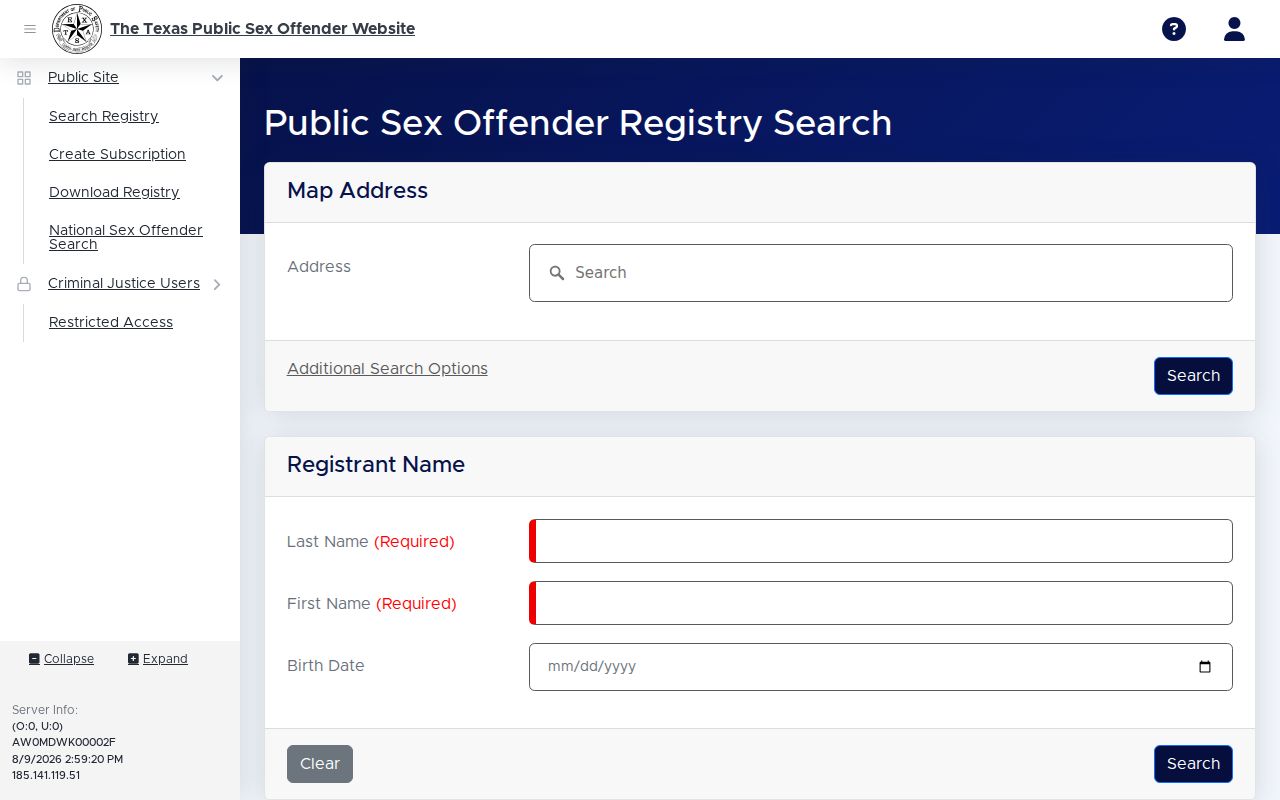
Its search modes should be used as separate ways to narrow a result, not as claims that every possible match will appear in one view.
Searching the Texas Public Sex Offender Registry
Texas DPS manages the registry under Code of Criminal Procedure Chapter 62. Its current interface is client-rendered, so the exact minimum characters and required name fields were not exposed during research. DPS does confirm name, location, route, proximity, and interactive-map modes. Do not add assumptions to a Matagorda County sex offender check when the live form does not state them.
- Open the official Texas registry and read its terms and search choices.
- Choose name or location, then try route or proximity when a map-based view better fits the question.
- Review the result list and compare more than a name, including the photograph, aliases, physical description, and address.
- Open the profile, read its offense and registration fields, and contact the local authority if key facts seem wrong or old.
| Search Control | Type | Required | What Is Confirmed |
|---|---|---|---|
| Name | Text search | Unspecified | DPS confirms name searching; exact input rules were not exposed. |
| Location | Location or map | Unspecified | DPS confirms this mode, but not the exact street, city, or ZIP inputs. |
| Route | Interactive map | No | An optional map search confirmed in the DPS mobile-app overview. |
| Proximity | GPS or map | No | DPS confirms nearby searching; exact radius choices were not exposed. |
| Subscriptions | Account service | Account required | A CRD Public Website account is needed to create public registry subscriptions. |
If one mode finds nothing, try another official mode. A location or map search can reveal records that a misspelled name will not, while a name search helps separate nearby addresses.
Matagorda County Registry and NSOPW
The Texas registry is the main source for a Matagorda County offender check. The Dru Sjodin National Sex Offender Public Website, or NSOPW, searches participating jurisdictions across state lines and adds federal safety resources. The two sources are complementary. If NSOPW returns no match, search Texas directly and contact the local registration authority when the concern is tied to a Matagorda County address.
The official NSOPW search shown here is a broad national layer and does not replace the more detailed state workflow.
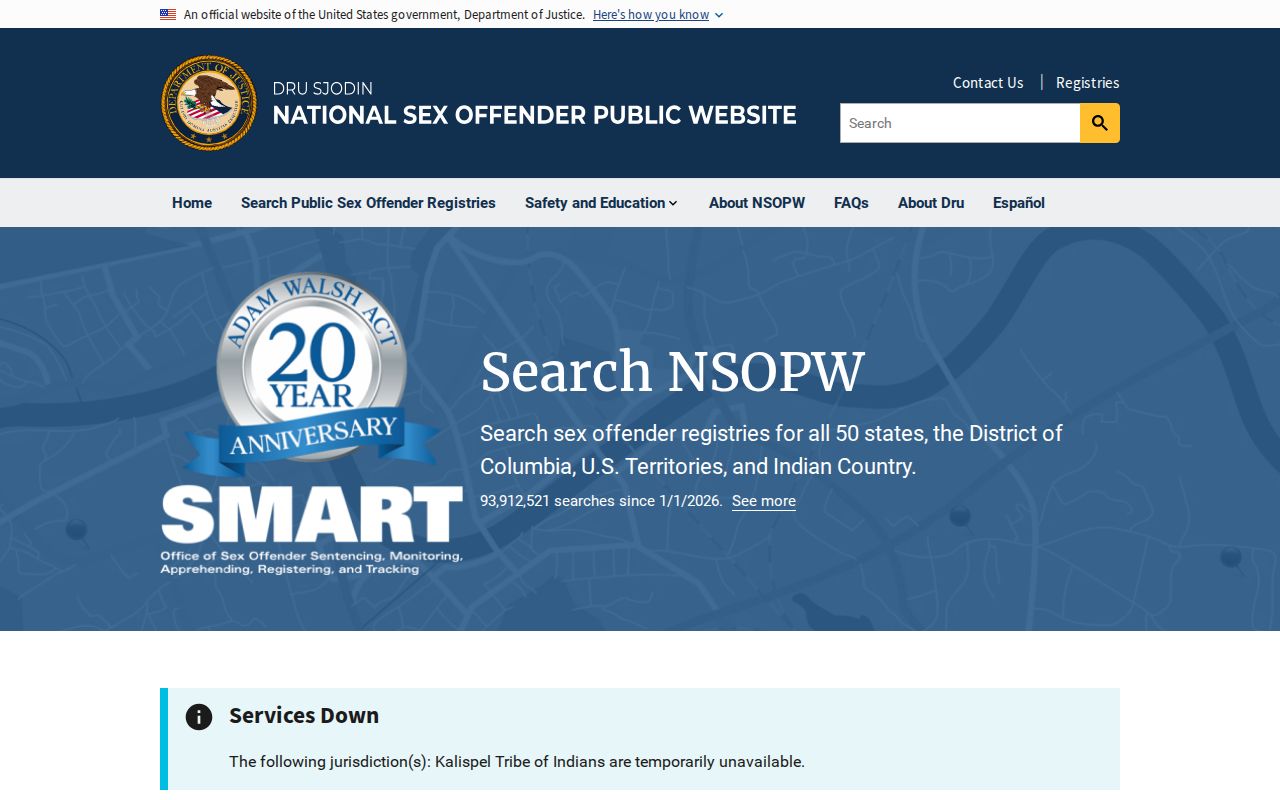
Use the national tool when a person may have moved across state lines, then verify any result against the participating jurisdiction's own registry.
For repeat monitoring, DPS offers Public Sex Offender Subscriptions through a CRD Public Website account. Official sources did not state one universal radius or event list, so rely on the live account prompts. The Texas DPS mobile app also supports name, location, route, and proximity searches on an interactive map.
What a Registry Profile Shows
A public profile is not a fresh court-file transcript. DPS confirms public categories, while some private identifiers are kept out. A sound Matagorda County registry match uses several fields at once and treats the official status as registration information, not as proof of current custody or a new offense.
| Name & Aliases | Identity names and aliases reported in the registration record. |
|---|---|
| Photo & Physical Description | A color photo plus confirmed descriptive information that helps distinguish similar names. |
| Registered Address | The address reported through the local authority; read it with the profile's status and verification information. |
| Offense & Disposition | The reportable offense and related disposition information, which may stem from a conviction, deferred adjudication, or listed juvenile adjudication. |
| Risk Level | Texas's numeric risk designation, which is not a federal SORNA tier. |
| Registration Information | Status and other registration details confirmed by DPS, with vehicle or school information when collected and public under law. |
Social Security numbers, driver's-license numbers, telephone numbers, online identifiers, victim-identifying facts, and other DPS-designated data are not public. A juvenile court can also order juvenile registration information to remain nonpublic.
Matagorda County Registry Address Concerns
An address or map pin can lag behind a move or local update. First reopen the profile and check its registration status and verification details. Next compare the photograph and other traits so a same-name result is not mistaken for the person of concern. Then call the sheriff for an unincorporated Matagorda County address, Bay City Police for a Bay City address, or Palacios Police for a Palacios address.
Report the mismatch and let the authority check its record. Do not visit the address or try to enforce registration law. A failure to comply with Chapter 62 can be a felony, but investigation and enforcement belong to law enforcement. The statewide database depends on local submissions, so the registering office is the right place to flag an apparent error.
Note: A registry address is registration data, not a promise that the person is present there at the time of a search.
Registration Requirements and Levels in Texas
Texas assigns a numeric risk level with a state-adopted screening tool. Duration is based on the reportable offense, not the risk number. Adults generally register for life or for ten years after discharge from incarceration, parole, or community supervision. Juvenile and out-of-state duties follow separate rules and can involve court orders or the law of another jurisdiction.
| Texas Designation | DPS Meaning | Duration | Verification |
|---|---|---|---|
| Level 1, low | Low danger; not likely to engage in criminal sexual conduct | Offense-based | Annual for most registrants |
| Level 2, moderate | Moderate danger; may continue such conduct | Offense-based | Annual for most registrants |
| Level 3, high | Serious danger; will continue such conduct | Offense-based | Annual unless another duty applies |
| Civil commitment | Court-identified sexually violent predator under intensive supervision and treatment | Applicable lifetime or commitment law | Every 30 days when not at a commitment facility |
| Repeat sexually violent offense | Two or more convictions or deferred adjudications | Offense-based | Every 90 days |
The DPS duties handout says most registrants verify yearly around their birthday. The 90-day and 30-day schedules apply to the specific groups shown above, not to every Matagorda County profile.
Matagorda County Offender Risk Levels
Federal SORNA labels are not a shortcut for reading a Texas registry profile. Texas Level 1, 2, and 3 labels describe assessed risk. They do not set the registration term. Chapter 62 and the reportable offense control whether an adult duty lasts for life or for the state's ten-year period. Calling a Texas Level 1 record a federal Tier I record can misstate both systems.
Registration duties also differ from community-supervision conditions. A court or supervision officer can impose conditions in a criminal case, while Chapter 62 creates the registration and public-notification system. The DPS registration program and the case record should be read for their own purposes.
Note: Risk level, registration length, verification frequency, and supervision status are four distinct facts that should not be merged.
Matagorda County Registry Notification
Local authorities maintain registrations, provide school notice when the law calls for it, and send information to DPS. When a high-risk offender or a civilly committed sexually violent predator moves into a community, DPS says it mails notice postcards to homes and businesses in that community. A local authority may also publish authorized information in a local periodical.
Texas does not impose one blanket statewide distance rule for every Matagorda County address. Local Government Code Section 341.906 lets a general-law city adopt limits for a child safety zone, but a searcher should verify the current Bay City or Palacios ordinance before claiming that a set distance applies. Registry subscriptions and the DPS mobile map offer added ways to watch an area without guessing at local law.
Lawful Use and Community Notification
Registry data is meant to support personal, family, and community safety. Verify identity with more than a name, check the profile's current status, and report a suspected error or breach to the listed local authority. A registry listing does not establish that a person is in jail, has an active warrant, or committed a new crime. Those questions require current custody, warrant, or court sources.
Choose the official channel that fits the concern. DPS handles the statewide registry, NSOPW expands the range, and local authorities receive reports about registration facts or possible noncompliance.
Use registry information lawfully: The Texas Code of Criminal Procedure Chapter 62 does not authorize threats, harassment, trespass, vigilantism, or other unlawful acts. Misuse of registry information can be a crime. Report concerns to law enforcement rather than confronting a registrant or household.